Ginger Cream Cookies: A 1960’s Remake
Last updated on July 21st, 2026
Table of contents
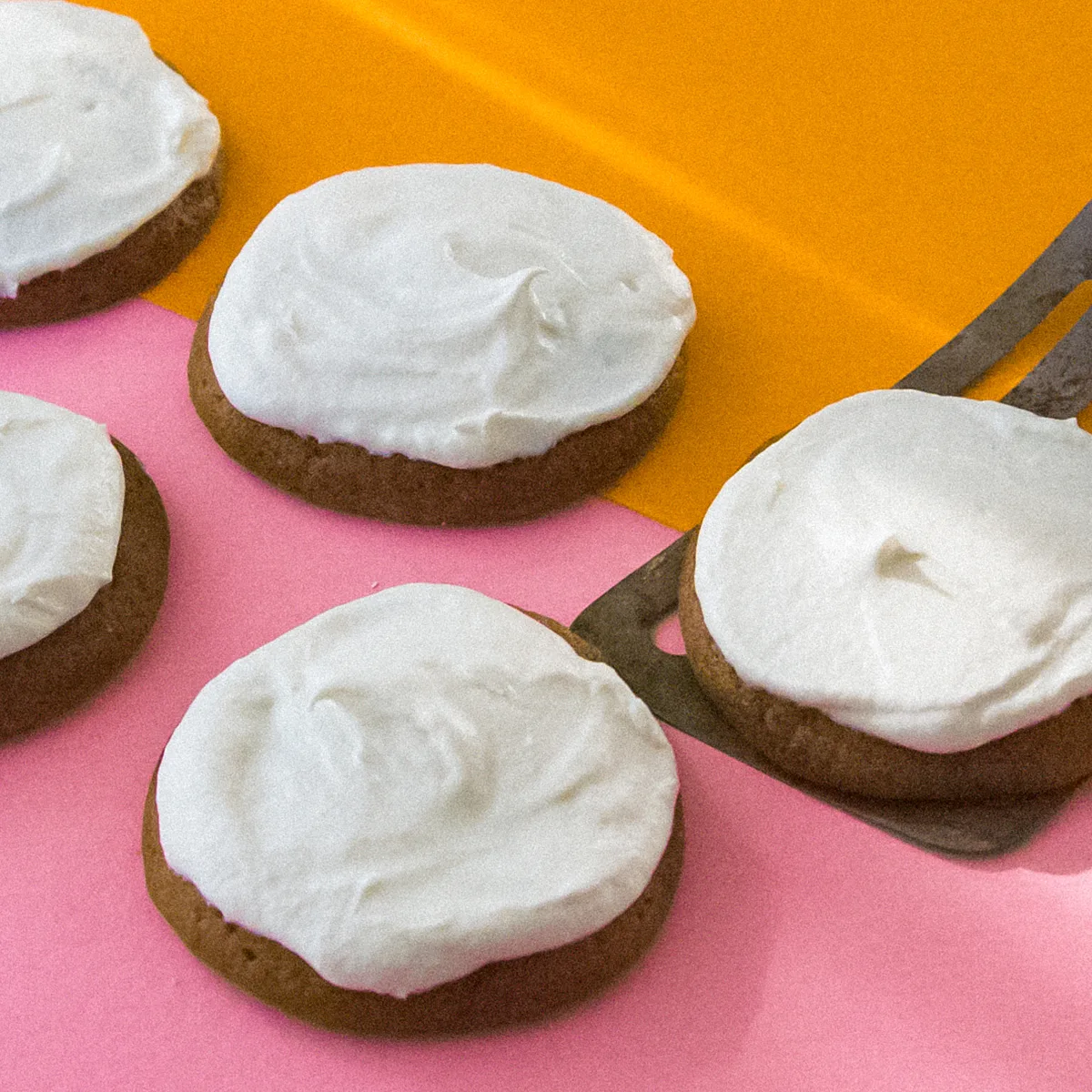
These Ginger Cream Cookies are a remake on a 1960’s spice cookie that have a soft, cake-like texture frosted that are topped with an easy homemade creamy frosting. These cookies have become a family favorite as the fall baking season arrives. I’ve taken this recipe for ginger creams, and used my bakery tested tips and all-natural ingredients adding more fat and flavor, while preserving the nostalgic flavor.
If you love vintage cookies, be sure to try my old-fashioned molasses cookies or molasses crisps cookies.
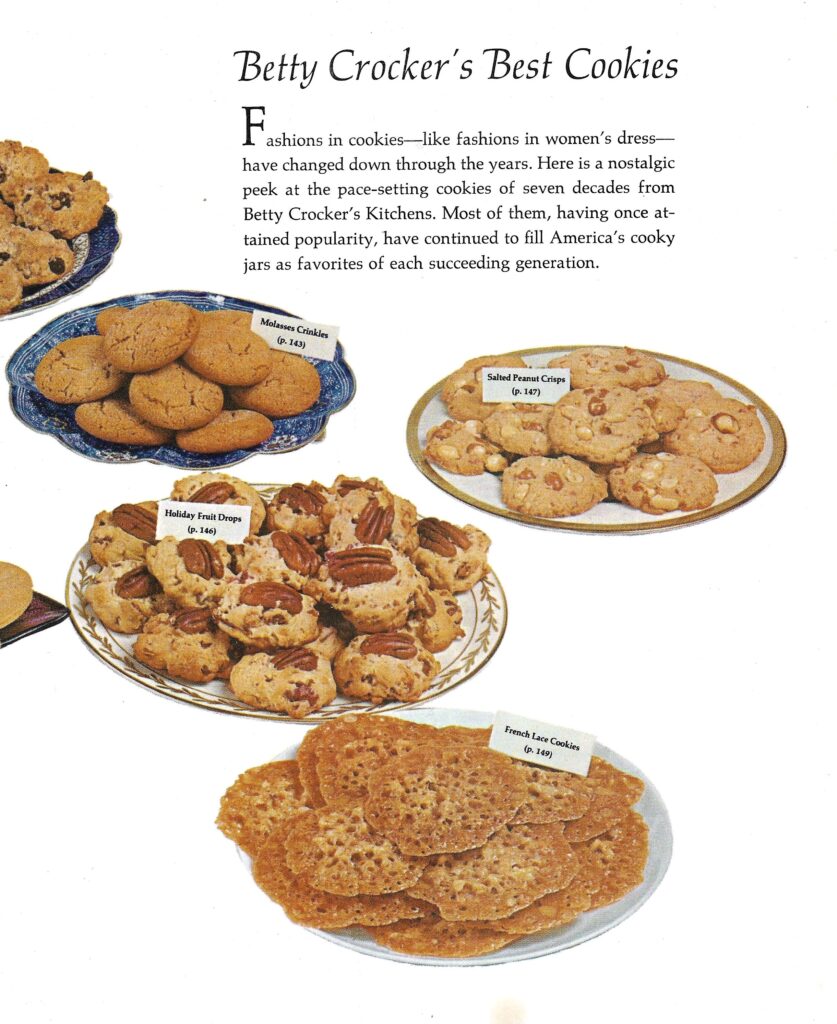
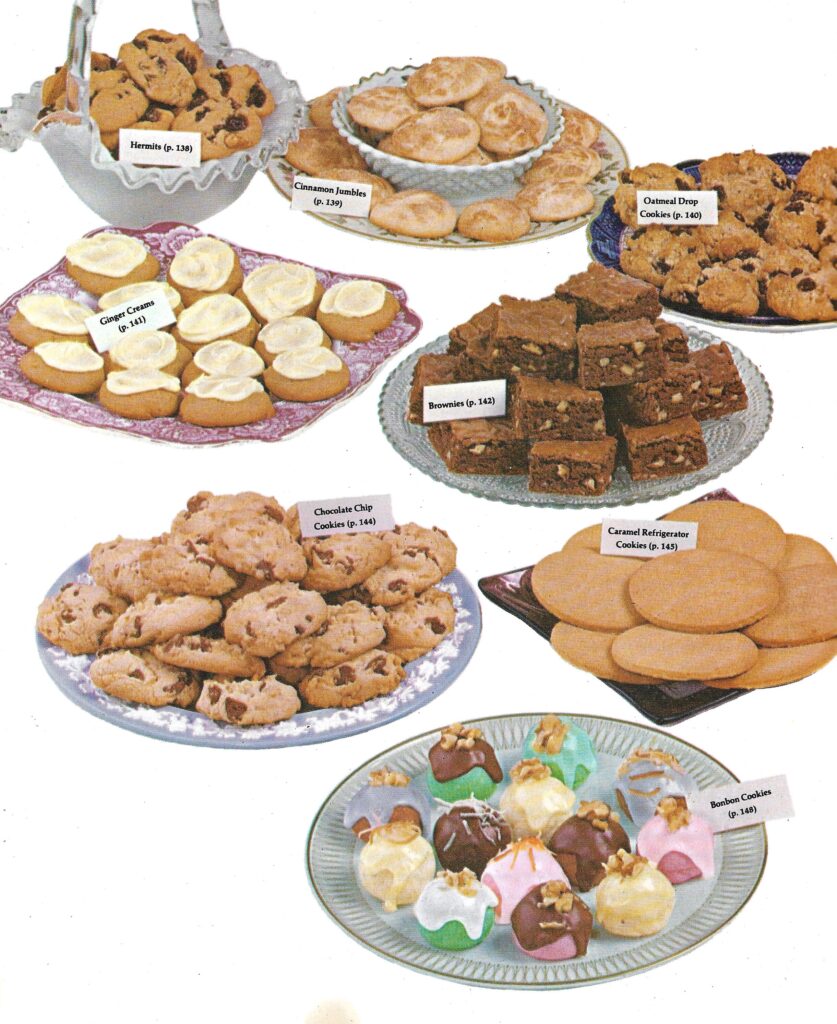
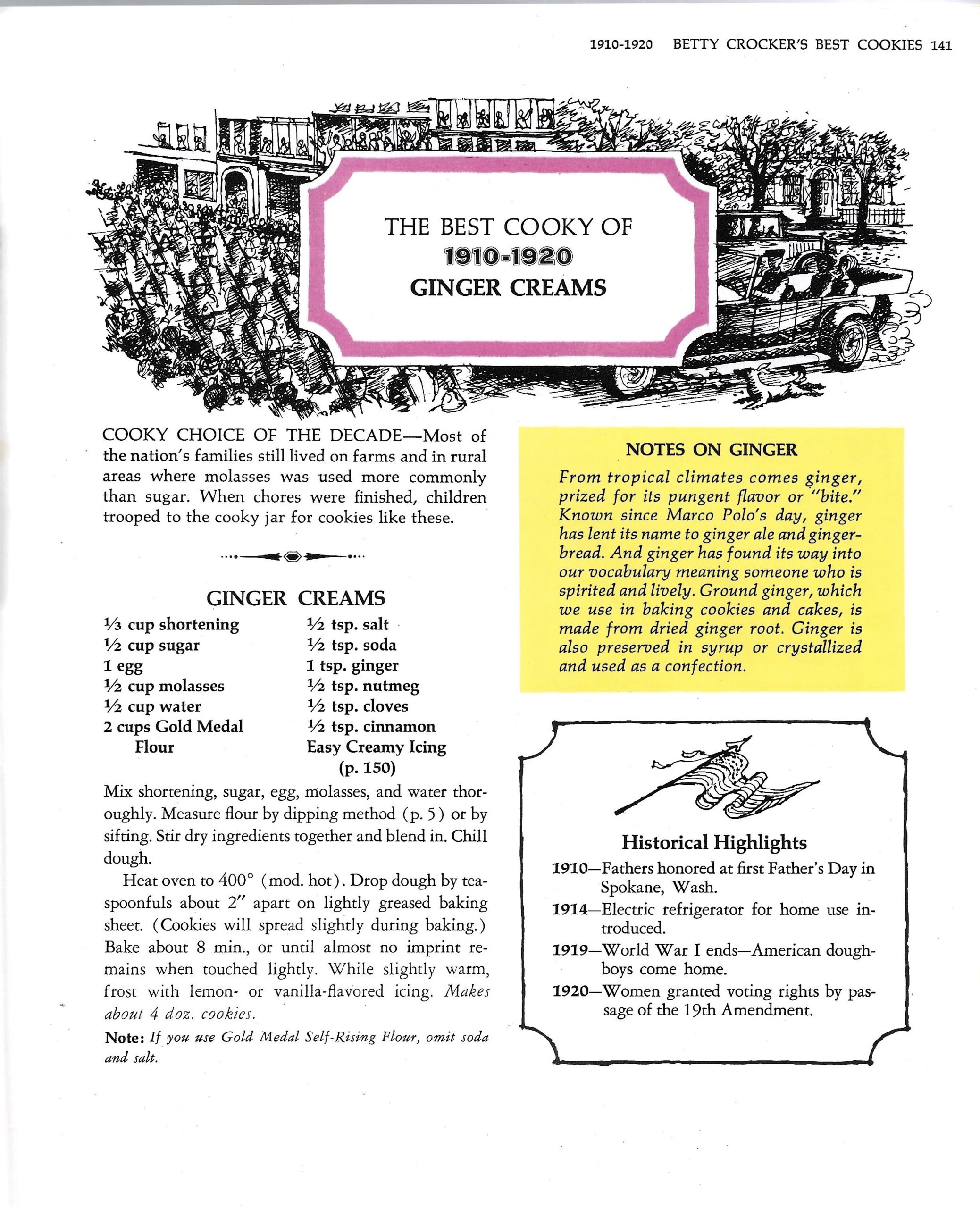
My vintage inspiration for these ginger creams from my 1963 “Betty Crocker’s Cooky Book”. The original recipe for Ginger Cream Cooky’s were named “The Best Cooky of 1910-1920” where the word “cookie” was spelled “cooky.” I’m grateful to have this book passed down from my grandmother and now part of my vintage cookbook collection. I found during my research that several modifications have been made to the recipe over the years.
Betty Crocker’s Cooky Book (1963) is your ultimate guide to easy-to-follow, nostalgic cookie recipes that never go out of style. This is an original copy my grandmother passed down to me. With over 150 cookie recipes, this vintage cookbook has a cookie for every occasion like classic drop cookies, to festive holiday ones for Valentine’s Day, Easter, Halloween, and Christmas, and treasured Heritage Cookies. In addition, the “Best Cookies” section will walk you through beloved flavors of mid-century America.
What sets this cookbook apart are the charming, whimsical illustrations, and practical baking tips that made it a staple in kitchens across the country. In fact it was actually just re-published this year in 2025 with the original retro look and feel.

Try the recipes also inspired by the book Classic Chocolate Chip Cookies OR patriotic cut out sugar cookies
Original Ginger Creams Recipe (1963)
Ingredients to make ginger creams
Wet Ingredients
- Butter is made from churned cream that contains 80% butterfat. European butter is churned longer and has a higher fat content (82%-85%), which is why it yields more flavor.
- Sugar is a made by processing the juice of the sugarcane plant. Cane sugar is a natural option that is less processed with a slightly courser texture.
- Eggs are produced by chickens and provide structure and stability in baking, while their proteins trap air, creating natural leavening.
- Molasses is a natural sweetener with a thick, dark syrup consistency, made made by boiling raw sugarcane or sugar beet juice.
Dry Ingredients
- All-purpose unbleached flour is made from ground wheat kernels with the bran and germ removed. It has a moderate protein content of 10-12%, making it a versatile option for most baked goods.
- Cornstarch is made from the starchy center of dried corn kernels used as a thickener in sauces and pie fillings, and in baked goods to create a light, tender crumb.
- Cinnamon comes from dried bark from the tropical Asian cinnamon tree. There are two types Cassia and Ceylon, found as whole sticks or ground. Cassia has a warm, sweet flavor and is more commonly used, while Ceylon known as “true cinnamon”, has an intense spicier bite.
- Ginger is a root from a plant grown in Southeast Asia. can be found in several forms, dried or fresh root, ground powder, or crystallized (candied) pieces. Ginger adds a bold, zesty bite to baked goods.
- Nutmeg is a warm spice that comes from the nutmeg tree in the Spice Islands. It is available as whole nutmeg, grated or pre-ground.
- Cloves are the dried flower buds from clove trees, grown in the Spice Islands. Whole cloves are used to infuse flavor into culinary dishes, while ground cloves add a warm, spicy kick to baked goods.
- Pink salt is a type of rock salt found near the Himalayas, that is minimally processed and contains trace minerals.
Ingredients for the creamy frosting
- Confectioners’ sugar, also known as powdered sugar, is finely ground with cornstarch added to prevent clumping. Its delicate texture makes it perfect for frostings and glazes, or to dust on baked goods.
- Cream is the high-fat portion made milk. It is used in baked goods to add richness, moisture and a light, airy texture. You can also use milk or half-and-half as substitutes for cream.
- Vanilla extract provides hints of caramel and spice, enhancing the depth of flavor to baked goods. Always use a high-quality, all-natural brand that is made from real vanilla beans containing at least 35% alcohol.
Make your own ingredients
Vanilla: Purchase Grade B vanilla beans (also called extract-grade), which have less moisture and a more concentrated flavor. Place 8 oz. of bourbon (or vodka) in glass bottle or jar. Split 5 – 7 vanilla beans down the middle and add to bottle. Store in a cool, dark place for 3 – 6 months before using. It will keep for many years, so as you use it, just top off with more bourbon and more beans.
Buttermilk: Add 1 T. vinegar or lemon juice into a liquid measuring cup and add cream or whole milk until it reaches the 1 c. measure line and let it sit for a few minutes before use.
“Bake it Modern” Tips
- Most vintage recipes call for shortening, popular for early 20th century recipes. It was readily available, cheaper and shelf-stable, and would yield a baked good with minimal spread. However, if you simply swap out the shortening for butter without chilling the dough, your cookie will spread and you will loose the cake-like, soft texture we love about this cookie. I used butter instead of shortening as I prefer the all-natural taste of butter over shortening which has a waxy texture and no flavor
- eliminated most of the water since butter contains water and less fat than shortening
- added cornstarch to lend a soft texture
- added baking powder for a light cake-like texture
- added additional amounts of the spices for bolder flavor, and increased the vanilla to add more flavor
- Use a good quality natural molasses like Grandma’s brand. Most baked good recipes call for mild molasses, but for bolder flavor choose robust blend.
Dietary Substitutions
For the past 12+ years, I have owned an all-natural specialty bakery converting conventional recipes to gluten free, vegan, wholesome, etc. You can read more about my pro-baking here.
Here are a few basic tips when converting conventional recipes into specialty baked goods.
- Shelf Life: Specialty baked goods tend to dry out faster and have a shorter shelf life than conventional baked goods. Store in an airtight container on counter for 1 – 2 days. For longer storage, freeze up to 6 months. Avoid refrigerating, as it can dry out baked goods.
- Let Batter Rest: Alternate flours can be dense or slightly gritty compared to white flour, so be sure to let the batter rest at least 15 minutes or overnight in the refrigerator before baking. This allows the flour to fully hydrate and produce a lighter, tender crumb.
- Oven Temperature: Alternative flours are delicate and tend to brown faster before the center is cooked through. Reduce oven to 325° and bake “low and slow,” adding a few extra minutes of bake time if needed.
Gluten-Free (no gluten)
- Flour: Swap out the flour with a premium gluten-free flour such as King Arthur Measure for Measure or use a homemade gluten-free flour blend. Be sure the flour blend contains xanthan gum or add 1/4 tsp. to 1/2 tsp. per every 1 cup of flour to the recipe.
- Hydration: Gluten free flours can make baked goods dense. Add 1 tablespoon of additional extra liquid (the same liquid called for in the recipe) to help lighten the texture.
- Fat: Add up to 1 to 2 Tbsp of additional fat, such as butter or oil to the recipe.
Vegan/Dairy Free (no animal products)
- Butter: Use unsalted vegan butter sticks such as Violife for best flavor and texture.
- Dairy: Replace dairy with unsweetened plant based milk such as oat, coconut or almond milk.
- Eggs: Replace each egg by adding 1 tsp. baking soda to the batter, then pour 1 Tbsp. white vinegar over it. Add the vinegar last though, to keep the leavening reaction.
- Fat: Add up to 1 to 2 Tbsp of additional fat like oil or vegan butter to the recipe.
Keto (low carb, high fat)
- Flour: Swap the white flour for almond flour or coconut flour.
- Sweetener: Replace sugar with Lakanto Monkfruit Sweetener which calls for a 1:1swap that mimics granulated sugar.
- Dairy: Replace dairy with unsweetened plant based milk such as coconut or almond milk.
- Hydration: Almond flour can make baked goods dense. Add 1 -2 tablespoons of additional extra liquid (the same liquid called for in the recipe) to help lighten the texture. Add 1 additional egg to help bind the batter.
- Fat: Add up to 2 Tbsp of additional fat, such as butter or oil to the recipe.
Wholesome (minimally processed)
- Flour: Swap out 1/3 to 1/2 of the white flour with King Arthur white whole wheat flour or King Arthur 100% whole wheat flour or Bob’s oat flour.
- Sweetener: Replace white sugar with maple syrup or honey. Use 3/4 c. honey for every 1 c. sugar. You can also swap out the white sugar with 1:1 swap using natural cane sugar, coconut sugar or date sugar.
- Dairy: Replace dairy with unsweetened plant based milk such as oat, coconut or almond milk.
- Lower Fat: For every 1 c. of butter, use 3/4 c. heart-healthy oil (like canola or extra-light olive) OR 1/2 c. unsweetened applesauce + 1/2 c. oil.
Allergen Free (none of the 9 allergens)
- Flour: Swap out the flour with a premium gluten-free flour such as King Arthur Measure for Measure or use a homemade gluten-free flour blend that does not contain tree nuts or soy. Be sure the flour blend contains xanthan gum or add 1/4 tsp. to 1/2 tsp. per every 1 cup of flour to the recipe. Here is a list of some other gluten-free flours to try.
- Butter: Use unsalted vegan butter sticks such as Violife for best flavor and texture. Add up to 1 to 2 Tbsp of additional fat like oil or vegan butter to the recipe.
- Dairy: Replace dairy with unsweetened plant based milk such as oat or coconut milk. Check the labels to make sure they are soy-free and nut-free.
- Eggs: Replace each egg by adding 1 tsp. baking soda to the batter, then pour 1 Tbsp. white vinegar over it. Add the vinegar last though, to keep the leavening reaction.
- Nuts: Omit all peanuts and tree nuts (almonds, brazil nuts, cashews, hazelnuts, macadamia nuts, pecans, pine nuts, pistachios, or walnuts.
FAQ’s
When baking, always use light colored, aluminum cake pans since they conduct even heat. Dark pans can make your baked goods darken fast.
Yes, you can prepare batter and scoop into cookie pucks. Place in a sealed container up to 3-5 days in refrigerator or in a freezer-safe container up to 6 months. If using cookie pucks from freezer, place on baking trays and let thaw up to 10 minutes then bake. You can also bake direct from freezer but they will need 2-3 minutes additional baking time.
This is a soft cookie dough, so chill dough for at least 10 minutes before scooping. This additional step to ensure less spread. Use a cookie scoop to make uniform-sized cookies.
You can use sorghum, however, it is less robust in flavor and color so using sorghum will yield a lighter cookie.
Storage & Freezing
Baked: Cover in air-tight container and leave on counter up to 3 days.
To freeze, cover in saran wrap and place in freezer-safe container up to 6 months. Thaw on counter in the container for 1/2 hour before opening up the container.
Unbaked batter: Prepare batter and scoop into cookie pucks. Place in a sealed container up to 3-5 days in refrigerator or in a freezer-safe container up to 6 months. If using cookie pucks from freezer, place on baking trays and let thaw up to 10 minutes then bake. You can also bake direct from freezer but they will need 2-3 minutes additional baking time.

Frosted Ginger Cream Cookies
Equipment
- mixer with paddle attachment
- measuring cups & spoons
- parchment sheets or Silpat baking mat
- cookie sheets
Ingredients
WET INGREDIENTS
- ½ c. butter
- ½ c. sugar
- ½ c. molasses
- 2 T. buttermilk or water
- 1 egg
- 1 ½ tsp. vanilla
DRY INGREDIENTS
- 2 c. unbleached flour
- 1 T. cornstarch
- 1 ½ tsp. ginger
- ¾ tsp. salt
- ½ tsp. cinnamon
- ½ tsp. nutmeg
- ½ tsp. cloves
- ½ tsp. baking powder
- ½ tsp. baking soda
FROSTING
- 1 c. confectioner sugar
- 2 T. salted butter soft
- 2 T. cream or milk
- 1 Tbsp. vanilla
Instructions
- PREP
- Whisk together dry ingredients into a bowl and set aside.
BATTER
- Beat together butter and sugar until light and fluffy.
- Add in dry ingredients and mix until combined.
- Add in remaining wet ingredients and mix until combined.
- Chill in fridge 30 minutes to 1 hour or overnight.
BAKE
- Line baking sheet with parchment paper or silicone mat. Scoop batter into cookie pucks 2” apart on cookie sheet. You can also scoop all the batter into cookie pucks and store in fridge until use.
- Bake at 350° for 10-12 minutes. Let cookies cool and frost with off-set spatula.
FROSTING
- Whisk together confectioner sugar, cream and vanilla.
Notes
Dietary Substitutions
For the past 12+ years, I have owned an all-natural specialty bakery converting conventional recipes to gluten free, vegan, wholesome, etc. You can read more about my pro-baking here. Here are a few basic tips when converting conventional recipes into specialty baked goods.- Shelf Life: Specialty baked goods tend to dry out faster and have a shorter shelf life than conventional baked goods. Store in an airtight container on counter for 1 – 2 days. For longer storage, freeze up to 6 months. Avoid refrigerating, as it can dry out baked goods.
- Let Batter Rest: Alternate flours can be dense or slightly gritty compared to white flour, so be sure to let the batter rest at least 15 minutes or overnight in the refrigerator before baking. This allows the flour to fully hydrate and produce a lighter, tender crumb.
- Oven Temperature: Alternative flours are delicate and tend to brown faster before the center is cooked through. Reduce oven to 325° and bake “low and slow,” adding a few extra minutes of bake time if needed.
Gluten-Free (no gluten)
- Flour: Swap out the flour with a premium gluten-free flour such as King Arthur Measure for Measure or use a homemade gluten-free flour blend. Be sure the flour blend contains xanthan gum or add 1/4 tsp. to 1/2 tsp. per every 1 cup of flour to the recipe.
- Hydration: Gluten free flours can make baked goods dense. Add 1 tablespoon of additional extra liquid (the same liquid called for in the recipe) to help lighten the texture.
- Fat: Add up to 1 to 2 Tbsp of additional fat, such as butter or oil to the recipe.
Vegan/Dairy Free (no animal products)
- Butter: Use unsalted vegan butter sticks such as Violife for best flavor and texture.
- Dairy: Replace dairy with unsweetened plant based milk such as oat, coconut or almond milk.
- Eggs: Replace each egg by adding 1 tsp. baking soda to the batter, then pour 1 Tbsp. white vinegar over it. Add the vinegar last though, to keep the leavening reaction.
- Fat: Add up to 1 to 2 Tbsp of additional fat like oil or vegan butter to the recipe.
Keto (low carb, high fat)
- Flour: Swap the white flour for almond flour or coconut flour.
- Sweetener: Replace sugar with Lakanto Monkfruit Sweetener which calls for a 1:1swap that mimics granulated sugar.
- Dairy: Replace dairy with unsweetened plant based milk such as coconut or almond milk.
- Hydration: Almond flour can make baked goods dense. Add 1 -2 tablespoons of additional extra liquid (the same liquid called for in the recipe) to help lighten the texture. Add 1 additional egg to help bind the batter.
- Fat: Add up to 2 Tbsp of additional fat, such as butter or oil to the recipe.
Wholesome (minimally processed)
- Flour: Swap out 1/3 to 1/2 of the white flour with King Arthur white whole wheat flour or King Arthur 100% whole wheat flour or Bob’s oat flour.
- Sweetener: Replace white sugar with maple syrup or honey. Use 3/4 c. honey for every 1 c. sugar. You can also swap out the white sugar with 1:1 swap using natural cane sugar, coconut sugar or date sugar.
- Dairy: Replace dairy with unsweetened plant based milk such as oat, coconut or almond milk.
- Lower Fat: For every 1 c. of butter, use 3/4 c. heart-healthy oil (like canola or extra-light olive) OR 1/2 c. unsweetened applesauce + 1/2 c. oil.
Allergen Free (none of the 9 allergens)
- Flour: Swap out the flour with a premium gluten-free flour such as King Arthur Measure for Measure or use a homemade gluten-free flour blend that does not contain tree nuts or soy. Be sure the flour blend contains xanthan gum or add 1/4 tsp. to 1/2 tsp. per every 1 cup of flour to the recipe. Here is a list of some other gluten-free flours to try.
- Butter: Use unsalted vegan butter sticks such as Violife for best flavor and texture. Add up to 1 to 2 Tbsp of additional fat like oil or vegan butter to the recipe.
- Dairy: Replace dairy with unsweetened plant based milk such as oat or coconut milk. Check the labels to make sure they are soy-free and nut-free.
- Eggs: Replace each egg by adding 1 tsp. baking soda to the batter, then pour 1 Tbsp. white vinegar over it. Add the vinegar last though, to keep the leavening reaction.
- Nuts: Omit all peanuts and tree nuts (almonds, brazil nuts, cashews, hazelnuts, macadamia nuts, pecans, pine nuts, pistachios, or walnuts.
Related Recipes
More Cookie recipes
Cookbooks
Tried this recipe? Leave a comment below!
Follow us on social to see more of our cozy collection curated for nostalgic bakers who love looking at vintage cookbooks, original vintage recipes, and retro magazine clippings.
This post may contain affiliate links. As an Amazon Associate, I recommend products I like to use or suggest and may receive a small commission at no cost to you. Please see my full disclosure for more details.
This post includes original cookbook images and text excerpts shared for educational and historical purposes. All rights belong to the original publisher.
Any commentary, notes, or recipe adaptations are my own and reflect my professional baking experience in an FDA-inspected, commercial kitchen. I am not a licensed medical professional and do not provide medical advice.
All modern recipe adaptations and photography © 2025 Vintage Baked Modern LLC. Please do not copy or reproduce without permission.
