

Old Fashioned Lemon Meringue Pie
Last updated on August 4th, 2026
Table of contents
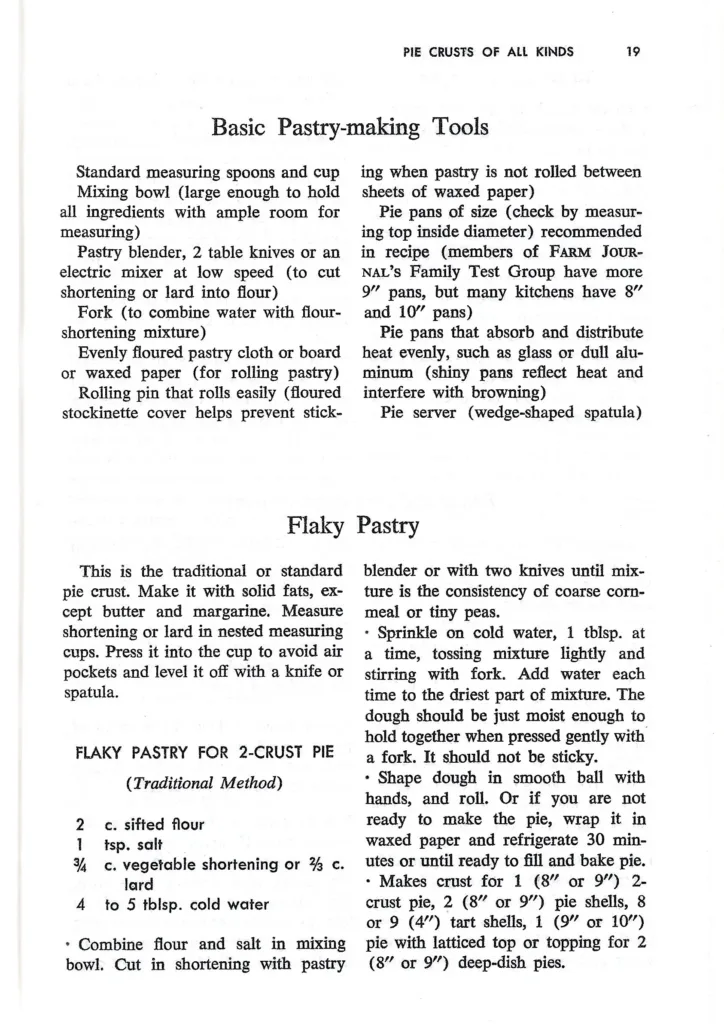
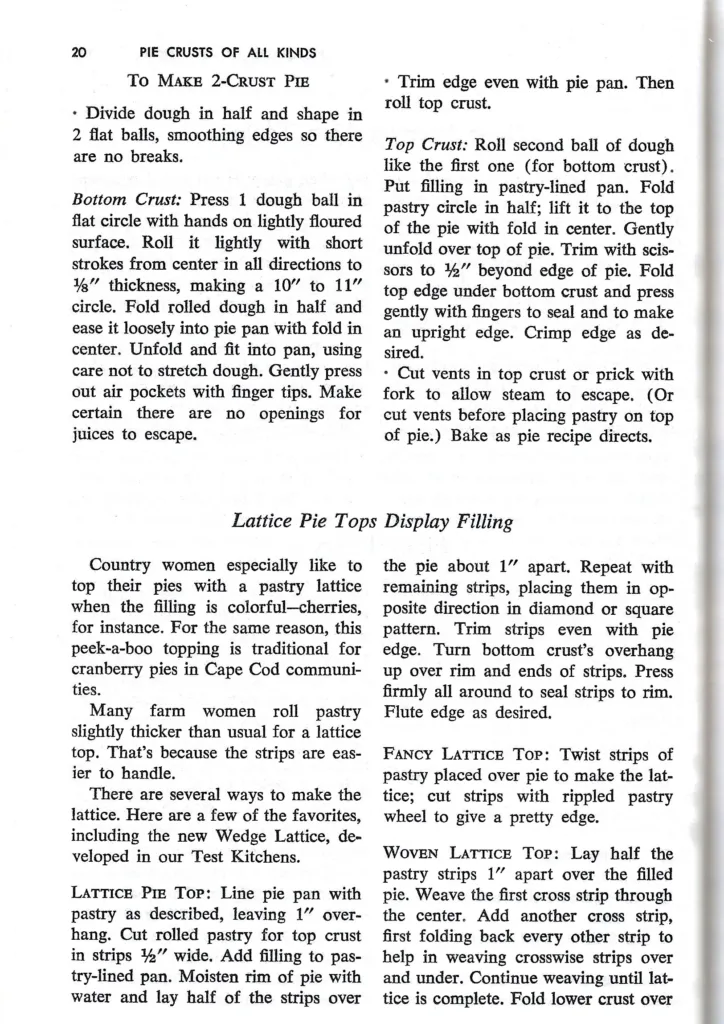
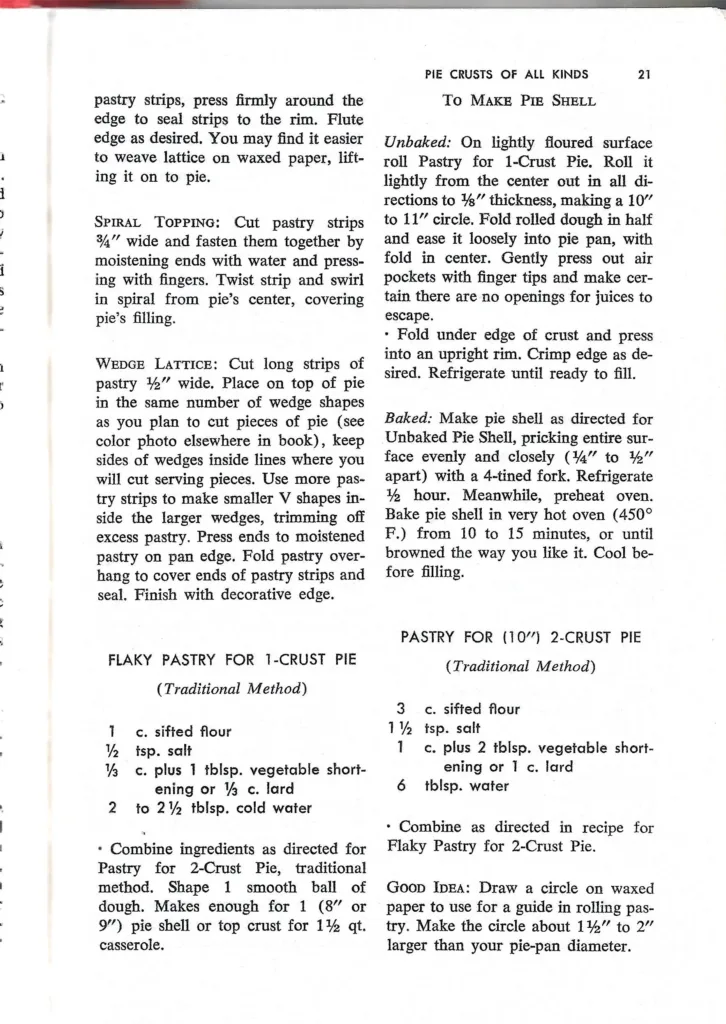
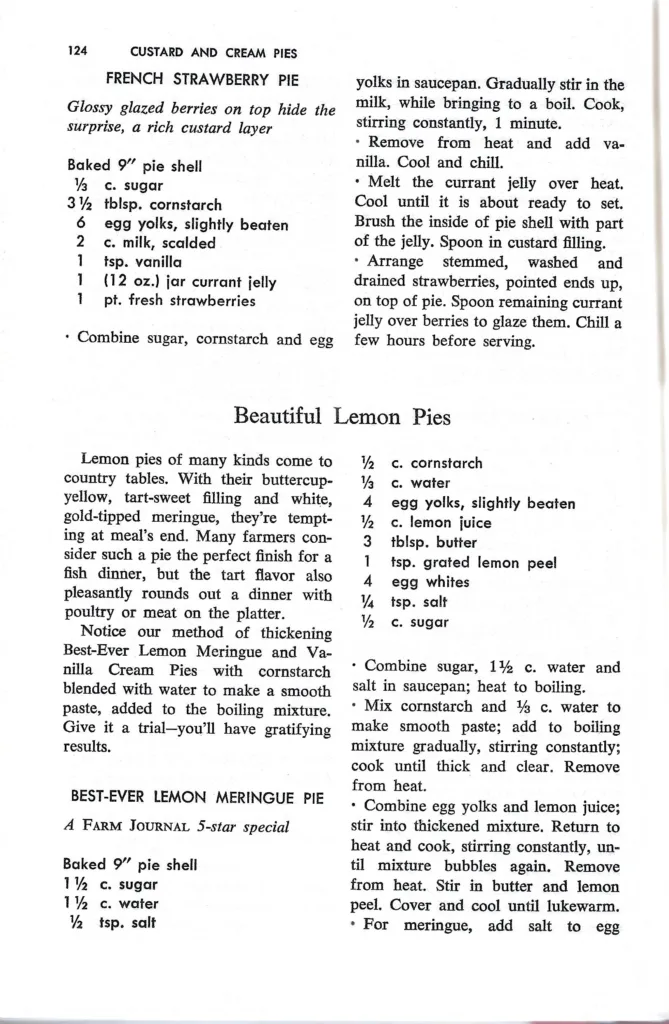
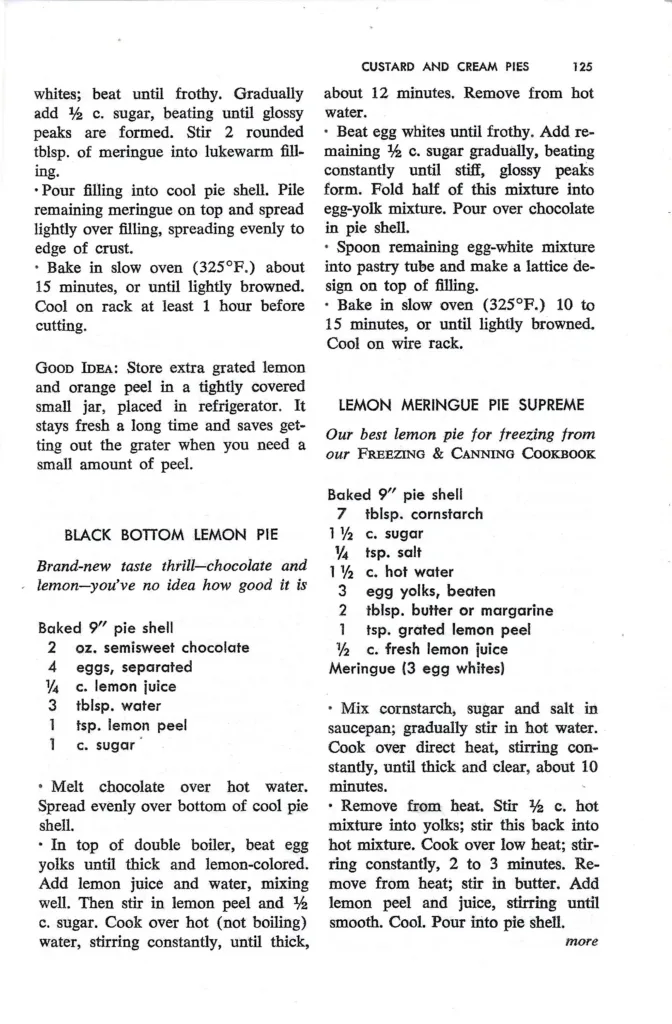
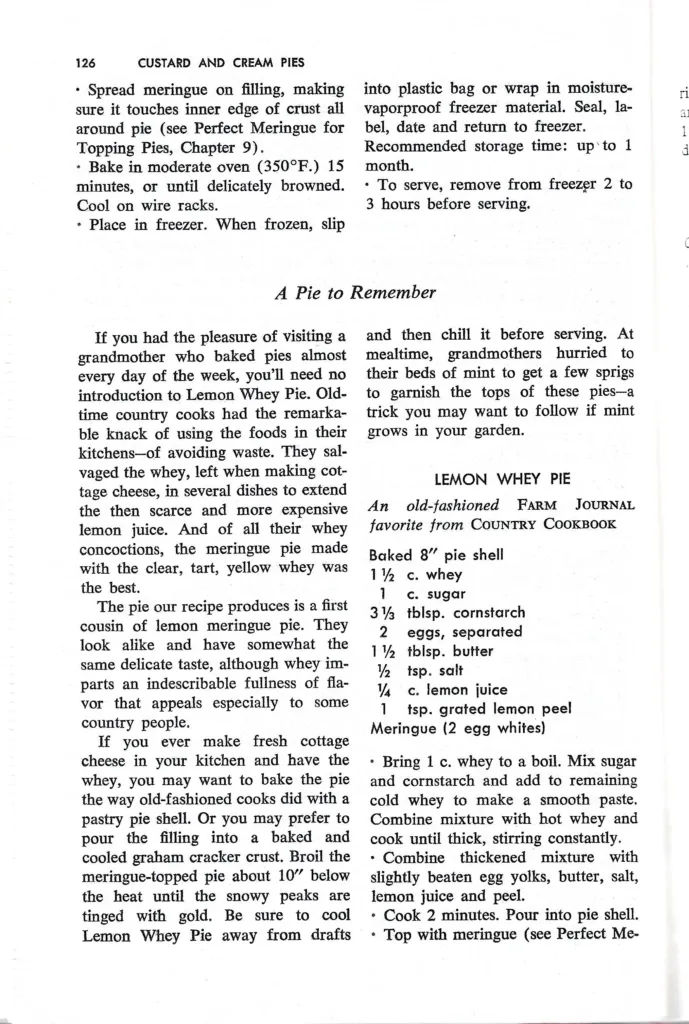
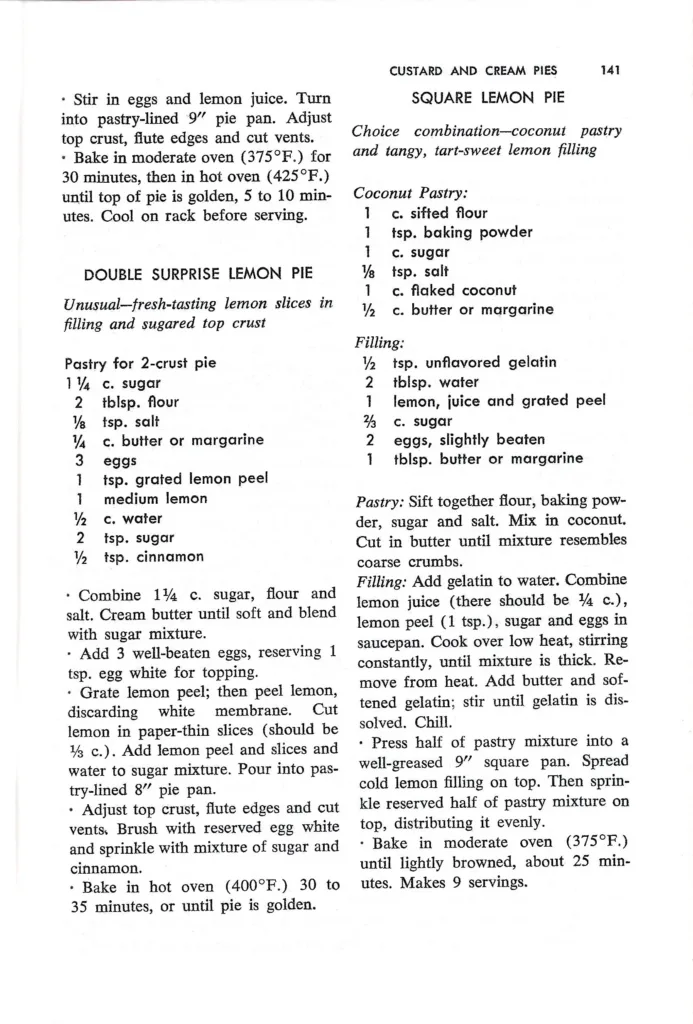
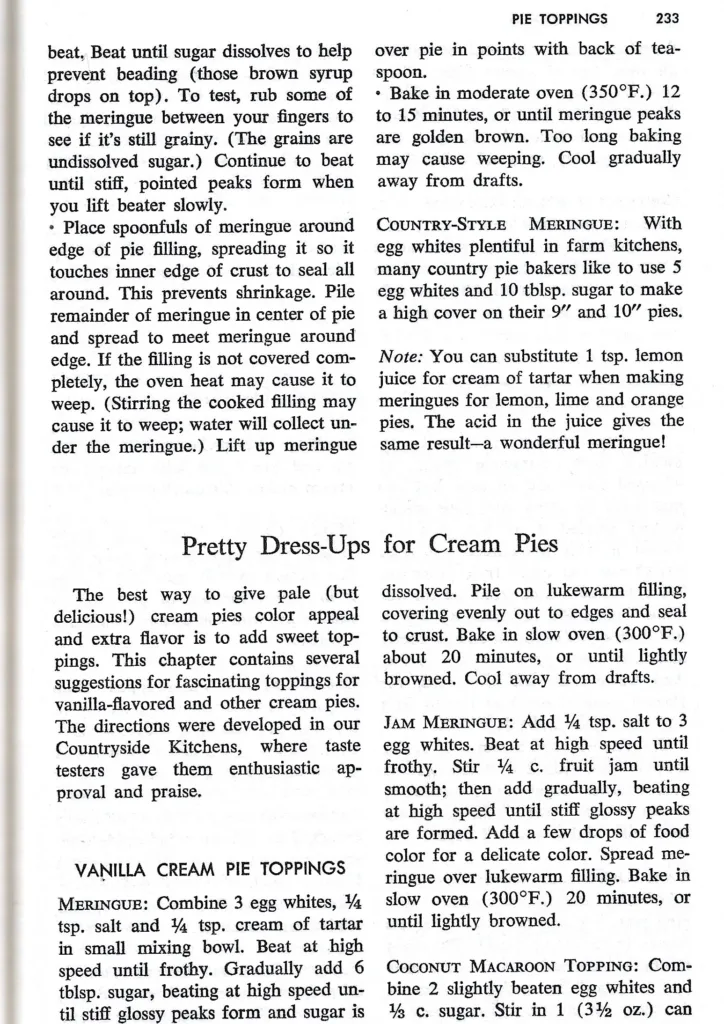
This Old Fashioned Lemon Meringue Pie has a flaky all-butter crust, creamy lemon filling and topped with a light toasted meringue. This vintage Spring dessert inspiration comes from my 1965 “Farm Journal’s Complete Pie Cookbook” and has a perfect balance of sweet and tart, perfect for Spring brunch or Mother’s Day tea party.
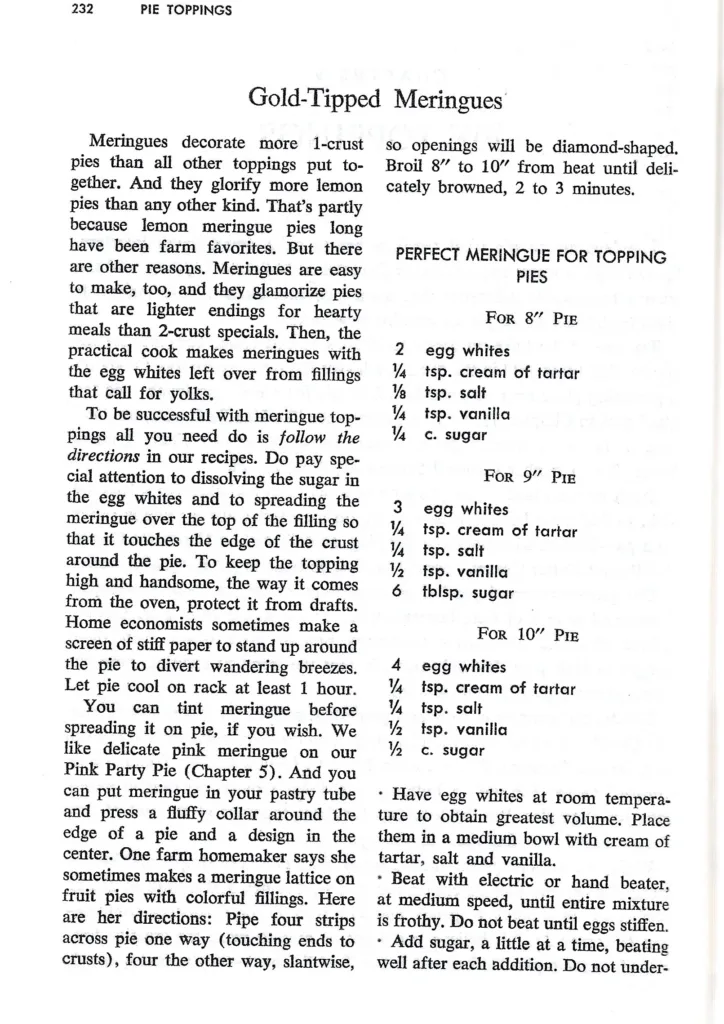
The vintage inspiration for this lemon pie recipe comes from my 1965 “Farm Journal’s Complete Pie Cookbook.” Farm Journal was originally an agricultural magazine founded in 1877. They started publishing cookbooks in the 1950’s that were reliable source and geared toward farm wives for gatherings and those with large families. My modern modifications to the original recipe included: adding more lemon flavor, using instant ClearJel in the filling, and adding a stabilized never-fail meringue.
I also have been inspired to make other recipes from my vintage Farm Journal cookbooks like Apple Cranberry Pie ” inspired by craberry-apple pie in Farm-Journals Best Ever Pies” (1981), and my Oatmeal Apricot Cookie from “Farm Journal’s Freezing and Canning Cookbook” (1963).

Ingredients to make Lemon Pie
Dry Ingredients
- All-purpose unbleached flour is made by grinding the seeds of the wheat plant and removing the bran and germ. It has a moderate protein content of 10-12%, making it a versatile option for baking cookies, cakes, and pastries.
- Sugar is derived from sugarcane and provides sweetness to baked goods. The most common type being granulated white sugar. Cane sugar is a natural option that is less processed with a slightly courser texture.
- Pink salt is a type of rock salt that contains trace minerals, adding nutrients to baked goods.
- Superfine sugar, also known as castor sugar, has a finer texture compared to granulated sugar. Its fine granules help yield tender baked goods by incorporating quickly with other ingredients. When making boiled frostings or candy, superfine sugar dissolves faster, reducing grittiness and creating a smoother texture.
- Cornstarch is made from the starchy center of dried corn kernels used as a thickener in sauces and pie fillings, and in baked goods to create a light, tender crumb.
- Cream of Tarter is an acid used to stabilize egg whites in frostings and meringues, helping them hold their structure. Use 1 tsp. lemon juice as a substitute for 1/2 tsp. of cream of tarter.
Wet Ingredients
- Butter is made from churned cream that contains 80% butterfat. European butter is churned longer and has a higher fat content (82%-85%), which is why it yields more flavor.
- Vodka is a distilled alcoholic beverage made from grains or potatoes. Adding vodka to pie crust will give it a flaky, tender texture because the alcohol prevents the gluten from developing.
- Lemons are a tart, citrus fruit that grow on trees in warm climates. Place lemons on the counter the day you plan to use them, as they will yield more juice at room temperature.
- Eggs are produced by female chickens and are important in baking because their proteins provide structure, they act as a natural leaving agent by trapping air that expands during baking, and they add moisture to baked goods.
- Lemon extract is a natural flavoring made from lemon zest and alcohol. Use just a small amount to add a bright, zingy flavor to baked good recipes.
- Vanilla provides hints of caramel and spice, enhancing the depth of flavor to baked goods. Look for a high-quality, all-natural brand made from real vanilla beans containing at least 35% alcohol.
Make your own ingredients
Vanilla: Purchase Grade B vanilla beans (also called extract-grade), which have less moisture and a more concentrated flavor. Place 8 oz. of bourbon (or vodka) in glass bottle or jar. Split 5-7 vanilla beans down the middle and add to bottle. Let it sit for 3-6 months in a cool, dark place. As you use it, continue to replace the bourbon and add more beans as it keeps for many years.
Crust
- To avoid a tough crust, add vodka or white vinegar to prevent excess gluten from forming. This not only keeps the crust flaky, it also prevents shrinking during baking.
- To save time, make the pie crust ahead of time and place in refrigerator or freezer until needed.
- Work quick to keep everything cold as possible.
- Dice the butter into small cubes and put into the freezer prior to making the pie dough. Chill water with some ice cubes before using. After you roll out the crust, put in fridge for 15 minutes so it’s cold going into a hot oven. This step will help keep the crust from shrinking.
- Cover crust with pie protector or foil to make sure the filling is cooked through but that the crust doesn’t burn.
- To prevent a soggy crust, dust the bottom crust with a thickening agent and brush with an egg wash.
- After you dust the raw pie crust dough, prick the bottom and sides with a fork. This will help steam escape and keep the bottom of the pie flat. Another way to keep the bottom flat is to cover the crust with parchment paper and place ceramic pie weights or raw, whole beans over the parchment paper.
- Use a ceramic or glass pie plate, which conduct slow, even heat.
Lemon Filling
- Be sure to put lemons on the counter the day you plan to make the pie. Room temp lemons will yield more lemon juice than lemons straight out of the fridge. The best tool for zesting lemons is a microplane. The best tool for juicing the lemons is a citrus squeezer.
- You can choose your favorite thickening agent (cornstarch or ClearJel). Vintage recipes typically call for flour or cornstarch. I really like to use ClearJel in pie filling as it works as 1:1 substitution for cornstarch and doesn’t make the filling cloudy like flour tends to do. Use regular ClearJel since you will be cooking the filling. Instant ClearJel is used for fillings that are not cooked.
Never-fail meringue
- Be sure to set out and separate your eggs as part of your prep. Room temp egg whites are best to achieve a light meringue. Add cornstarch to my meringue keep it stabilized.
- It is best to top lemon filling with the meringue while the filling is still hot. This will help prevent weaping, otherwise known as when liquid forms between the layer of filling and meringue.
- When you are spreading out the meringue over the lemon filling, start from the outer edge towards the center and cover the filling right up to the edge of the crust to prevent the meringue from shrinking.
- When serving, dip knife into hot water before slicing pie to prevent meringue from sticking and deflating from being cut. Be sure to eat a cream pie the same day it is made as the meringue will shrink and separate from the filling.
Dietary Substitutions
For the past 12+ years, I have owned an all-natural specialty bakery converting conventional recipes to gluten free, vegan, wholesome, etc. You can read more about my pro-baking here.
Here are a few basic tips when converting conventional recipes into specialty baked goods.
- Shelf Life: Specialty baked goods tend to dry out faster and have a shorter shelf life than conventional baked goods. Store in an airtight container on counter for 1 – 2 days. For longer storage, freeze up to 6 months. Avoid refrigerating, as it can dry out baked goods.
- Let Batter Rest: Alternate flours can be dense or slightly gritty compared to white flour, so be sure to let the batter rest at least 15 minutes or overnight in the refrigerator before baking. This allows the flour to fully hydrate and produce a lighter, tender crumb.
- Oven Temperature: Alternative flours are delicate and tend to brown faster before the center is cooked through. Reduce oven to 325° and bake “low and slow,” adding a few extra minutes of bake time if needed.
Gluten-Free (no gluten)
- Flour: Swap out the flour with a premium gluten-free flour such as King Arthur Measure for Measure or use a homemade gluten-free flour blend. Be sure the flour blend contains xanthan gum or add 1/4 tsp. to 1/2 tsp. per every 1 cup of flour to the recipe.
- Hydration: Gluten free flours can make baked goods dense. Add 1 tablespoon of additional extra liquid (the same liquid called for in the recipe) to help lighten the texture.
- Fat: Add up to 1 to 2 Tbsp of additional fat, such as butter or oil to the recipe.
Vegan/Dairy Free (no animal products)
- Butter: Use unsalted vegan butter sticks such as Violife for best flavor and texture.
- Dairy: Replace dairy with unsweetened plant based milk such as oat, coconut or almond milk.
- Eggs: Replace each egg by adding 1 tsp. baking soda to the batter, then pour 1 Tbsp. white vinegar over it. Add the vinegar last though, to keep the leavening reaction.
- Fat: Add up to 1 to 2 Tbsp of additional fat like oil or vegan butter to the recipe.
Wholesome (minimally processed)
- Flour: Swap out 1/3 to 1/2 of the white flour with King Arthur white whole wheat flour or King Arthur 100% whole wheat flour or Bob’s oat flour.
- Sweetener: Replace white sugar with maple syrup or honey. Use 3/4 c. honey for every 1 c. sugar. You can also swap out the white sugar with 1:1 swap using natural cane sugar, coconut sugar or date sugar.
- Dairy: Replace dairy with unsweetened plant based milk such as oat, coconut or almond milk.
- Lower Fat: For every 1 c. of butter, use 3/4 c. heart-healthy oil (like canola or extra-light olive) OR 1/2 c. unsweetened applesauce + 1/2 c. oil.
Storage
Baked Pie: After the pie is baked, cover pie and leave on counter up to 3 days. You can also freeze a pie that has been baked up to 6 months.
Unbaked Pie: Cover pie with saran wrap or foil. Place covered pie in a freezer-safe container up to 6 months. Bake pie straight from freezer and add additional baking time as needed.

Old-Fashioned Lemon Meringue Pie
Equipment
Ingredients
CRUST
- 2 c. unbleached flour
- 2 tsp. sugar
- 1 tsp. salt
- 12 T. butter cold & diced into cubes
- ⅓ c. ice cold water
- 1 T. vodka (lemon juice or white vinegar)
PIE FILLING
- 1 ⅓ c. water
- 1 ¼ c. sugar superfine
- ⅓ c. instant ClearJel or cornstarch
- ½ c. lemon juice
- 2 T. lemon zest
- 4 egg yolks (save whites)
- ½ tsp. salt
- 3 T. butter
- ¼ tsp. lemon extract
MERINGUE TOPPING
- ½ c. sugar superfine
- ⅓ c. water
- 1 T. instant Clearjel or cornstarch
- 4 egg whites
- ½ tsp. cream of tarter
- 1 tsp. vanilla
- pinch of salt
Instructions
PREP
- Pre-heat oven to 400°.
- Zest and juice 2 lemons.
- Separate out egg yolks and whites into 2 bowls.
PIE CRUST
- Put dry ingredients in food processor or mixer, add cold butter and pulse until crumbly.
- Remove bowl from mixer and add lemon juice and water. Mix by hand with pastry blender until just combined.
- Pour out onto a piece of saran wrap and shape into (1) 8" round disk. Refrigerate 10 minutes or overnight.
- Place pie disk between 2 pieces of parchment paper and roll out on a pastry mat into round disk 2" larger than your pie plate.
- Place dough in pie plate and crimp edges. Pierce pie shell with fork, lightly dust with thickening agent, and brush with egg white wash.
- Place a round circle of parchment over the pie and fill bottom with pie weights. Bake pie shell at 400° for 15 minutes.
FILLING
- Place water, sugar, clearjel and salt in heavy pan. Cook 5 minutes.
- Remove from burner and add in egg yolks, lemon juice, lemon zest, and unsalted butter and stir constantly until incorporated.
- Place back on burner and return mixture to a boil (about 1-2 minutes). Set aside until use.
MERINGUE TOPPING
- In heavy duty pan, cook together sugar, clearjel, and water until all ingredients are dissolved (about 3-4 minutes). Remove from burner.
- In the bowl of stand mixer, place egg whites, cream of tarter, salt, and vanilla. Mix for 5-7 minutes until egg whites are glossy and stiff.
ASSEMBLE PIE
- Pour warm lemon filling into cooled pie crust.
- Top the lemon filling layer immediately with the meringue, covering all the lemon filling and up to the edge of the pie crust to prevent shrinkage.
- Bake pie at 375° for 10-12 minutes until meringue is golden brown.
- Allow pie to cool on counter for at least 1 hour. Serve either at room temperature or place in refrigerator and serve cold. When serving, dip knife into hot water before slicing pie to prevent sticking.
- Store leftover pie in the refrigerator.
Related Recipes
Pie recipes
Tried this recipe? Leave a comment below!
Follow us on social to see more of our cozy collection curated for nostalgic bakers who love looking at vintage cookbooks, original vintage recipes, and retro magazine clippings.
📌Pinterest 👍Facebook 📷Instagram 🎵 TikTok ▶️ YouTube
This post includes my photographs and limited text excerpts used for identification, commentary, and historical discussion. The cookbook content shown is attributed to the original publication. All modern commentary, recipe adaptations, baking notes, and original food photography are © Vintage Baked Modern LLC.
The dietary variations such as gluten-free, dairy-free, and vegan options, are provided as general baking suggestions based on my recipe testing and professional baking experience. I am not a registered dietitian or medical professional. Be sure to verify product labels and consult a qualified professional regarding allergies, medical conditions, or individual dietary needs.
