

Whole Wheat Bread Loaf
Last updated on September 21st, 2026
Table of contents
This Whole Wheat Bread Loaf recipe is made with a blend of whole wheat flour and bread flour, and yields a light, tender texture and crispy crust. It’s quick and simple to make on a lazy weekend of baking.
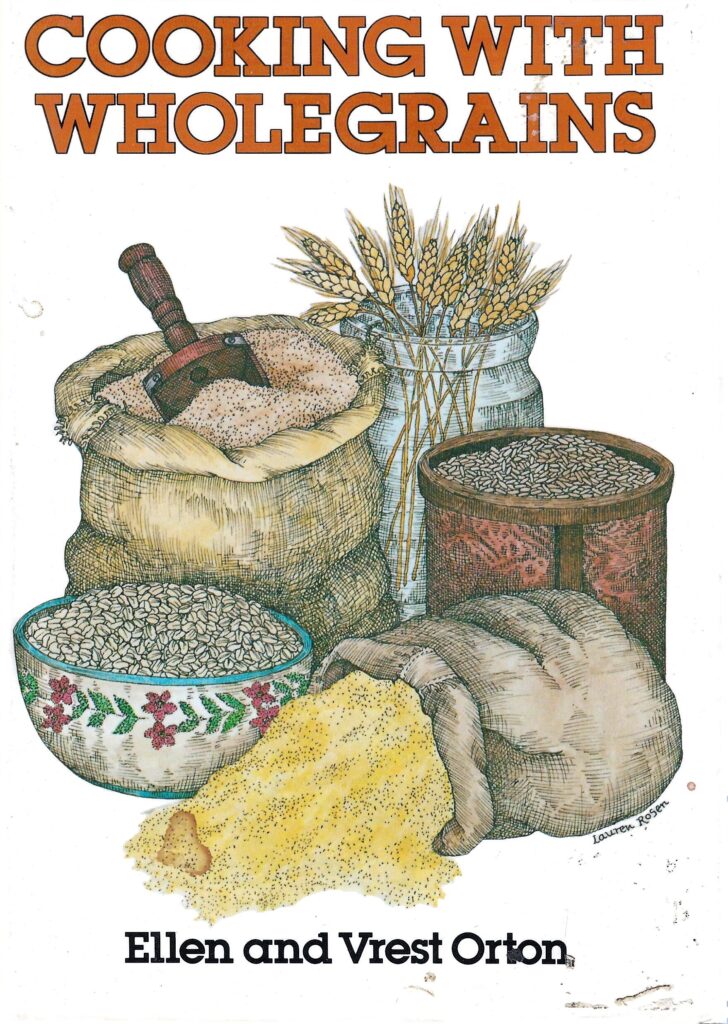
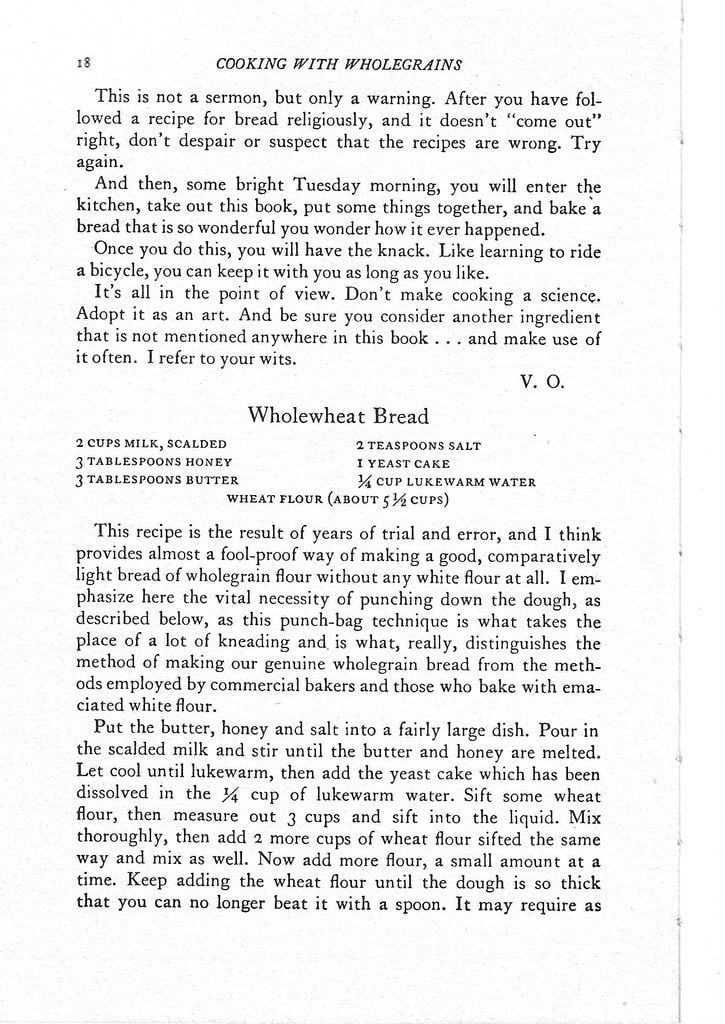
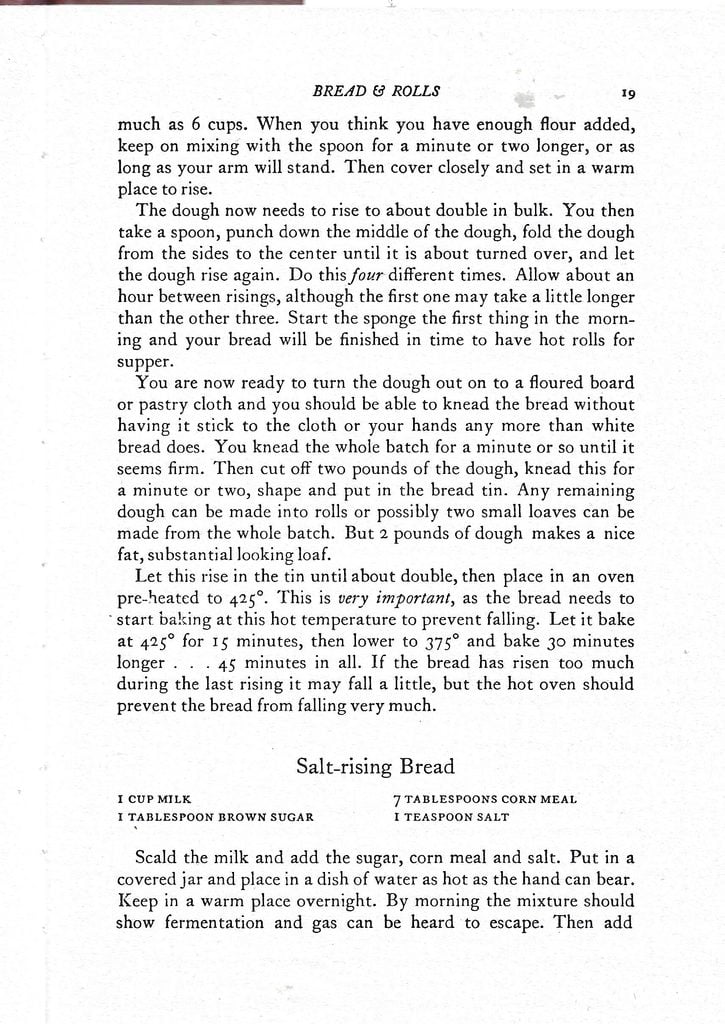
My vintage inspiration for this whole wheat bread loaf is from my 1951 copy of “Cooking with Wholegrains” by Ellen and Vrest Orton. This vintage cookbook educates home cooks about the history of milling while providing wholesome, natural grain recipes. From hearty breads to muffins and desserts, this vintage cookbook offers recipes using simple whole grain ingredients. This book educates home cooks about the history of milling while providing wholesome, natural grain recipes. From hearty breads to muffins and desserts, this vintage cookbook offers recipes using simple whole grain ingredients. I’ve included an original recipe for wholewheat bread.
This recipe is similar to my Sourdough French Bread, however, it uses some whole wheat flour to add some wholesome goodness.



Ingredients
Wet Ingredients
- Whole milk is a cow’s milk that retains its 3.25% natural fat content, giving it a creamy, rich texture.
- Bottled water is best when making sourdough so that the minerals from your tap water do not interfere with the natural fermentation process.
- Butter is made from churned cream that contains 80% butterfat. European butter is churned longer and has a higher fat content (82%-85%), which is why it yields more flavor.
Dry Ingredients
- Bread flour is a type of wheat flour that has a higher protein content of 11-14%. Therefore it helps develop more gluten, providing more structure and elasticity, making it ideal for baking bead. It is perfect for making bread, rolls, and pizza crust.
- Whole Wheat Flour is made from the entire wheat kernel, has a protein content of 13-15%, is rich in fiber, and gives a hearty, nutty flavor to breads.
- Instant Yeast is a leavening agent that produces carbon dioxide gas and alcohol during fermentation. During the baking process, gas gets trapped in the dough and the alcohol evaporates. Instant yeast speeds up this process, cutting the rise time in half.
- Sugar is a made by processing the juice of the sugarcane plant. Cane sugar is a natural option that is less processed with a slightly courser texture.
- Pink salt is a type of rock salt found near the Himalayas, that is minimally processsed and contains trace minerals.
Dietary Substitutions
For the past 13 years, I’ve owned an all-natural specialty food company, specializing in converting conventional recipes to gluten free, vegan, wholesome, etc. You can read more about my professional baking background here.
Here are a few key tips when converting conventional recipes into specialty baked goods.
- Shelf Life: Specialty baked goods tend to dry out faster and have a shorter shelf life than conventional baked goods. Store in an airtight container at room temperature for 1 – 2 days. For longer storage, freeze up to 6 months. Avoid refrigerating, as it can dry out baked goods.
- Let Batter Rest: Alternative flours can be dense or slightly gritty compared to white flour, so be sure to let the batter rest at least 15 minutes or overnight in the refrigerator before baking. This allows the flour to fully hydrate and produce a lighter, tender crumb.
- Oven Temperature: Alternative flours are delicate and tend to brown faster before the center is cooked through. Reduce oven to 325° and bake “low and slow,” adding a few extra minutes of bake time if needed.
Gluten-Free (no gluten)
- Flour: Swap out the flour with a premium gluten-free flour such as King Arthur Measure for Measure or use a homemade gluten-free flour blend. Be sure the flour blend contains xanthan gum or add 1/4 tsp. to 1/2 tsp. per every 1 cup of flour to the recipe. Here is a list of some other gluten-free flours to try.
- Hydration: Add 1 tablespoon of additional extra liquid (the same liquid called for in the recipe) to help lighten the texture.
- Fat: Add 1 to 2 Tbsp of additional fat, such as butter or oil to improve moisture.
Vegan/Dairy Free (no animal products)
- Butter: Use unsalted vegan butter sticks such as Country Crock unsalted vegan butter for best flavor and texture. For the cream cheese use Violife Cream Cheese.
- Dairy: Replace dairy with unsweetened plant based milk such as oat, coconut or almond milk.
- Eggs: For each egg, add 1 tsp. baking soda to the batter and pour 1 Tbsp. white vinegar over it. Always add the vinegar last to preserve the leavening reaction.
- Fat: Add 1 to 2 Tbsp of additional fat like oil or vegan butter to compensate for the loss of moisture from the eggs and dairy.
Wholesome (minimally processed)
- Flour: Swap out 1/3 to 1/2 of the white flour with King Arthur white whole wheat flour or King Arthur 100% whole wheat flour or Bob’s oat flour.
- Sweetener: Replace white sugar with maple syrup or honey. Use 3/4 c. honey for every 1 cup of sugar OR replace white sugar with 1:1 swap using natural cane sugar, coconut sugar or date sugar.
- Dairy: Replace dairy with unsweetened plant based milk such as oat, coconut or almond milk.
- Fat: For every 1 cup of butter, use 3/4 c. heart-healthy oil (like extra-light olive) OR use 1/2 c. unsweetened applesauce plus a 1/2 c. oil for a lower-fat option.
Equipment
Recommended tools: (affiliate links)
- mixer
- mixing bowl
- liquid measuring cup
- measuring cups and spoons
- bread pan
- bees wrap covers
- bread lame
- digital thermometer
Storage
Baked Loaf: Cover in air-tight container and leave on counter up to 3 days. To freeze, cover in saran wrap and place in freezer-safe container up to 6 months. Thaw on counter in the container for 1/2 hour before opening up the container.
Baker’s Tips
You can make this as a sourdough round boule. After first proof, just shape into a round loaf and place in either a banneton basket or on a baking pan.

Whole Wheat Bread Loaf
Equipment
- Stand Mixer
- bee wrap cover or towel
- bread loaf pan
Ingredients
DRY INGREDIENTS
- 3 ½ c. unbleached bread flour
- 2 c. whole wheat flour
- 2 T. honey
- 1 T. sugar
- 2 ¼ tsp. instant yeast
- 2 tsp. salt
WET INGREDIENTS
- 2 c. warm milk
- ¼ c. melted butter
- ¼ c. warm water to dissolve yeast
Instructions
PREP
- Grease 9x5x3 bread pan with non-stick spray or butter.
- Dissolve yeast in warm water.
- Melt butter in microwave (about 30 seconds),
DOUGH
- In a stand mixer with the dough hook, put in the melted butter, sugar, yeast, honey and warm milk.
- Add the flour and salt and run mixer for about 8 minutes until dough doesn't stick to the sides of bowl.
- Remove dough from the bowl and grease a bowl (large enough to let dough double in size). Cover with beeswax cover or towel.
FIRST PROOF
- Let rise in a warm place about 1 hour-1 1/2 hours. The dough is ready when it doubles in size.
- Place dough onto a board or counter dusted with flour and knead by hand to shape into a rectangle. Roll up and place in bread loaf pan. Cover with beeswax cover or towel.
SECOND PROOF
- Let rise in a warm place another 45 minutes-1 hour. The loaf is ready when it reaches slightly above the top of the bread pan.
BAKE
- Bake at 375° for 20 minutes. Reduce oven to 350° and bake an additional 25-30 minutes or until center is 205°.
- Let bread cool before slicing. Cover and store in airtight container and keep on counter 1-2 days or wrap in foil or cling wrap that is sealed in a freezer ziploc bag up to 6 months.
Notes
Dietary Substitutions
For the past 12+ years, I have owned an all-natural specialty bakery converting conventional recipes to gluten free, vegan, wholesome, etc. You can read more about my pro-baking here. Here are a few basic tips when converting conventional recipes into specialty baked goods.- Shelf Life: Specialty baked goods tend to dry out faster and have a shorter shelf life than conventional baked goods. Store in an airtight container on counter for 1 – 2 days. For longer storage, freeze up to 6 months. Avoid refrigerating, as it can dry out baked goods.
- Let Batter Rest: Alternate flours can be dense or slightly gritty compared to white flour, so be sure to let the batter rest at least 15 minutes or overnight in the refrigerator before baking. This allows the flour to fully hydrate and produce a lighter, tender crumb.
- Oven Temperature: Alternative flours are delicate and tend to brown faster before the center is cooked through. Reduce oven to 325° and bake “low and slow,” adding a few extra minutes of bake time if needed.
Gluten-Free (no gluten)
- Flour: Swap out the flour with a premium gluten-free flour such as King Arthur Measure for Measure or use a homemade gluten-free flour blend. Be sure the flour blend contains xanthan gum or add 1/4 tsp. to 1/2 tsp. per every 1 cup of flour to the recipe.
- Hydration: Gluten free flours can make baked goods dense. Add 1 tablespoon of additional extra liquid (the same liquid called for in the recipe) to help lighten the texture.
- Fat: Add up to 1 to 2 Tbsp of additional fat, such as butter or oil to the recipe.
Vegan/Dairy Free (no animal products)
- Butter: Use unsalted vegan butter sticks such as Violife for best flavor and texture.
- Dairy: Replace dairy with unsweetened plant based milk such as oat, coconut or almond milk.
- Eggs: Replace each egg by adding 1 tsp. baking soda to the batter, then pour 1 Tbsp. white vinegar over it. Add the vinegar last though, to keep the leavening reaction.
- Fat: Add up to 1 to 2 Tbsp of additional fat like oil or vegan butter to the recipe.
Keto (low carb, high fat)
- Flour: Swap the white flour for almond flour or coconut flour.
- Sweetener: Replace sugar with Lakanto Monkfruit Sweetener which calls for a 1:1swap that mimics granulated sugar.
- Dairy: Replace dairy with unsweetened plant based milk such as coconut or almond milk.
- Hydration: Almond flour can make baked goods dense. Add 1 -2 tablespoons of additional extra liquid (the same liquid called for in the recipe) to help lighten the texture. Add 1 additional egg to help bind the batter.
- Fat: Add up to 2 Tbsp of additional fat, such as butter or oil to the recipe.
Wholesome (minimally processed)
- Flour: Swap out 1/3 to 1/2 of the white flour with King Arthur white whole wheat flour or King Arthur 100% whole wheat flour or Bob’s oat flour.
- Sweetener: Replace white sugar with maple syrup or honey. Use 3/4 c. honey for every 1 c. sugar. You can also swap out the white sugar with 1:1 swap using natural cane sugar, coconut sugar or date sugar.
- Dairy: Replace dairy with unsweetened plant based milk such as oat, coconut or almond milk.
- Lower Fat: For every 1 c. of butter, use 3/4 c. heart-healthy oil (like canola or extra-light olive) OR 1/2 c. unsweetened applesauce + 1/2 c. oil.
Allergen Free (none of the 9 allergens)
- Flour: Swap out the flour with a premium gluten-free flour such as King Arthur Measure for Measure or use a homemade gluten-free flour blend that does not contain tree nuts or soy. Be sure the flour blend contains xanthan gum or add 1/4 tsp. to 1/2 tsp. per every 1 cup of flour to the recipe. Here is a list of some other gluten-free flours to try.
- Butter: Use unsalted vegan butter sticks such as Violife for best flavor and texture. Add up to 1 to 2 Tbsp of additional fat like oil or vegan butter to the recipe.
- Dairy: Replace dairy with unsweetened plant based milk such as oat or coconut milk. Check the labels to make sure they are soy-free and nut-free.
- Eggs: Replace each egg by adding 1 tsp. baking soda to the batter, then pour 1 Tbsp. white vinegar over it. Add the vinegar last though, to keep the leavening reaction.
- Nuts: Omit all peanuts and tree nuts (almonds, brazil nuts, cashews, hazelnuts, macadamia nuts, pecans, pine nuts, pistachios, or walnuts.
Related Recipes
More Bread recipes
Tried this recipe? Leave a comment below!
Follow us on social to see more of our cozy collection curated for nostalgic bakers who love looking at vintage cookbooks, original vintage recipes, and retro magazine clippings.
📌Pinterest 👍Facebook 📷Instagram 🎵 TikTok ▶️ YouTube
This post includes original cookbook images and text excerpts shared for educational and historical purposes. All rights belong to the original publisher. Any commentary, notes, or recipe adaptations are my own and reflect my professional baking experience in a commercial kitchen. I am not a licensed medical professional and do not provide medical advice.
All modern recipe adaptations and photography © 2026 Vintage Baked Modern LLC. Please do not copy or reproduce without permission.
